
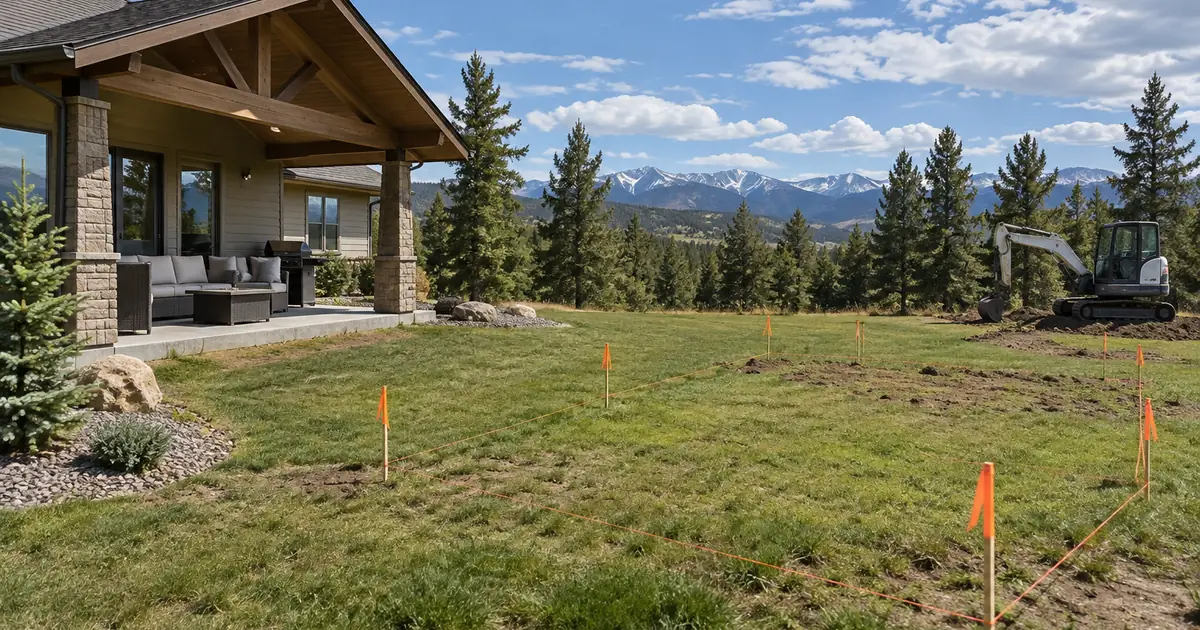
A septic system is not something you see every day, but you do live with where it goes. Placement affects your yard, your patio, how you use your property, and how well the system works for years. It is one of the most important parts of a septic plan, and it is worth thinking about before anything is dug.
This guide explains how placement gets decided, what we think about from the homeowner's side, and what to know before the plan is final. It is written for property owners in El Paso, Douglas, Teller, and Elbert Counties.
Start With How You Will Live on the Property
A system that works on paper can still be in a bad spot. If you were planning to put a patio or a play area in a certain corner, you probably do not want the tank and leach field to end up there. We like to think about placement the way a homeowner would, not just the way a contractor would, because you are the one who will live with this system, use it, and maintain it. Nobody wants to sit on their back patio staring at their septic system.
Our background is in residential construction more broadly, so we look at the whole property: where the house sits, where the yard is, and how the system fits into all of it.
The Soil Has a Say
Where you would like the system to go is only half of the question. The other half is what the soil will allow. That is why we dig profile pits and do a soil analysis before the plan is drawn. The soil results are turned into an engineered plan, and the plan is what gets sent to the county for the permit. A spot that looks ideal from the deck may not be what the soil supports, and it is much better to learn that before the design is done.
Things That Can Change the Plan
A site visit often turns up things that change where a system can go. Some examples of what we look for:
- Wells and cisterns. Septic systems have to stay a required distance from water sources. A common example: a system is planned for one spot, a cistern the owner did not know about turns up, and the system has to be 100 feet away from it.
- Trees and rock. Wooded and rocky lots, especially in the mountains of Teller County, limit where the excavation can happen.
- Slope. On a sloped lot, placement matters, so we walk the property with you before the plan is finalized.
- Where the home sits. The location of the house, the driveway, and the property lines all work together with the system layout.
The exact distances and rules depend on the state and your county, and the county reviews the plan as part of the permit. We build the plan so it can be submitted for approval.
Acreage Gives You Options, but Not Unlimited Ones
On larger parcels, such as many properties in Elbert County and Douglas County, there is usually more room to place a system well. That does not mean anywhere will do. The layout still has to account for wells, setbacks, and where the home sits. More space simply gives you more choices to weigh.
Plan for How You Will Use the Land Later
Think about what else you might want on the property down the road, such as a shed, a driveway extension, a garden, or an addition. It is much easier to keep those things away from the system if the plan accounts for them from the start. As a rule of thumb, avoid driving or building over a leach field. If you are not sure whether something you are planning will conflict with where the system goes, ask during the site visit.
Built to Last, Without Over-Engineering
Our goal on every install is a system that lasts as long as possible, costs as little as possible, and needs as little maintenance as possible. We do not want to over-engineer something that costs more than it will ever pay you back. Good placement is a big part of that. A system that is in the right spot, designed for your soil, and laid out with the rest of the property in mind is the one you are least likely to have to think about later.
Before You Call
- Sketch where the house is or will be, and where you plan to spend time outdoors
- Note any wells, cisterns, or buried lines you know about
- Mark any additions you may want in the next few years
- Tell us whether you already have a soil test or a permit
We serve El Paso, Douglas, Teller, and Elbert Counties. Learn more about septic system installation, or send us a message and we will set up a site visit to talk through placement on your property.